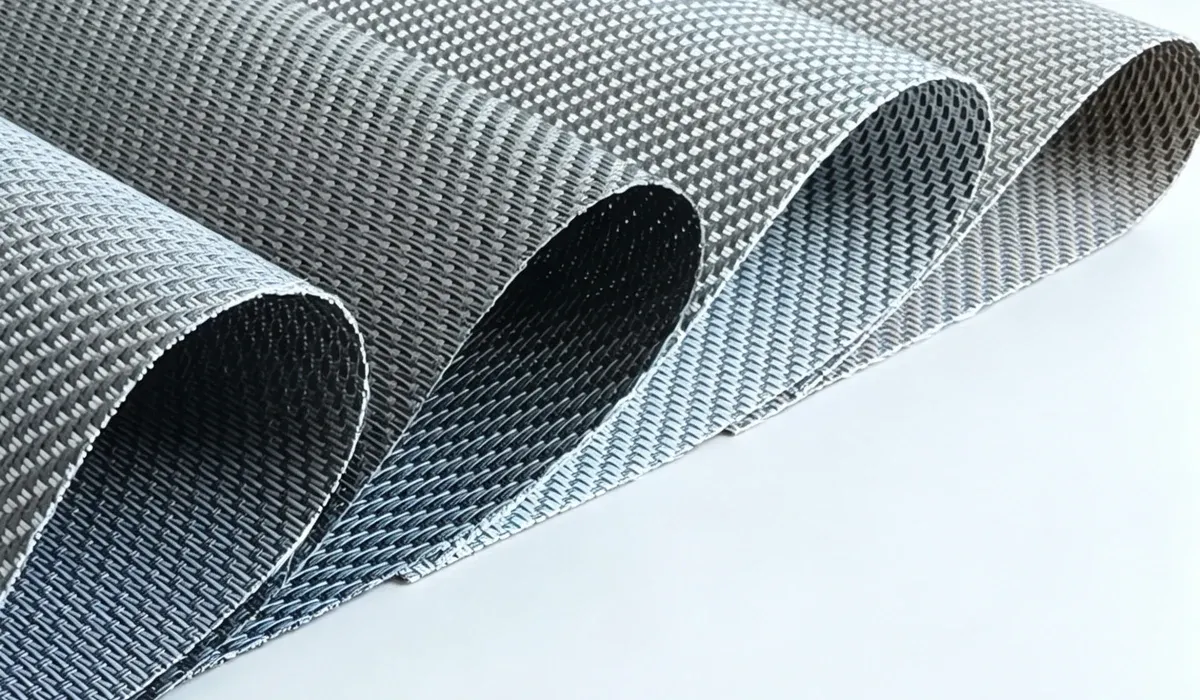
Fabric Knowledge
Dip-Coated vs Laminated Fibreglass Fabric: What Changes in Service
Two coating processes look similar on a sample card and behave differently on a building. What dip coating does to a fiberglass yarn, and how to check which one you are buying.
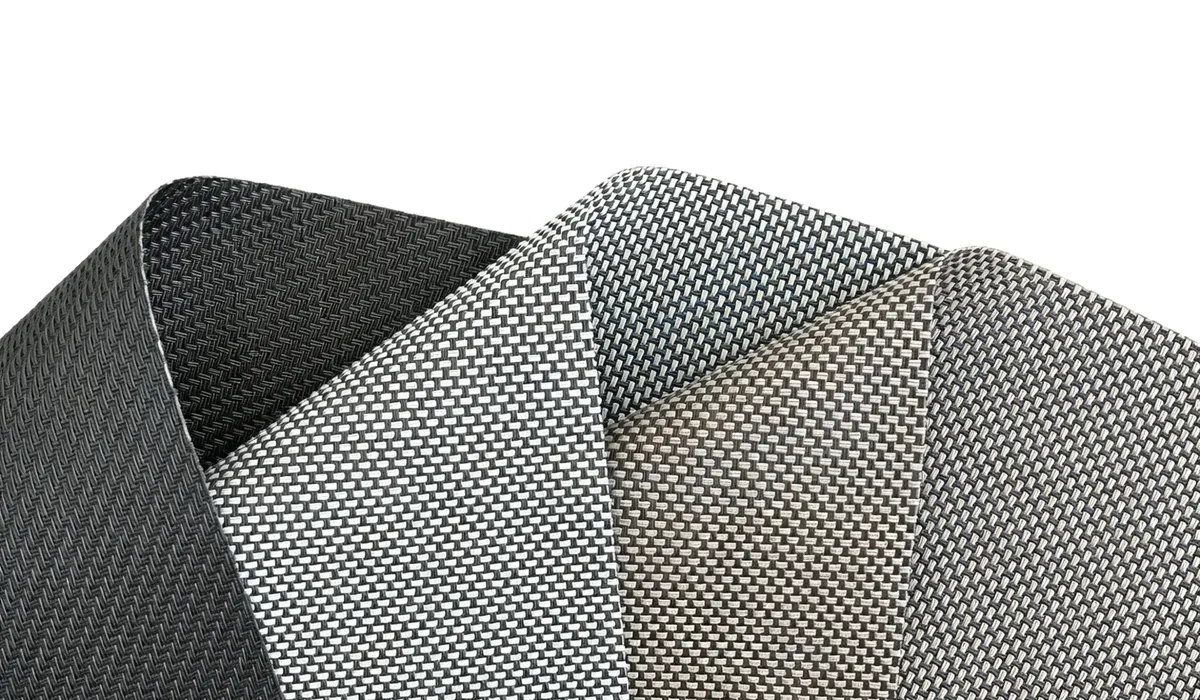
Two different ways to put PVC on glass
Lamination presses or bonds a PVC film onto a woven substrate. Dip coating draws the woven fabric through a PVC paste so the polymer penetrates the yarn bundle before it cures.
Why penetration matters at the cut edge
When the coating sits on the surface, the yarns at a cut edge can fray and the coating can lift. When the coating has penetrated the yarn, cutting leaves a cleaner edge, and the fabric can be cut with a crush or ultrasonic blade.
How to check which process you are buying
Cut a small square and look at the edge under a magnifier. A dip-coated fabric shows coating between the yarns as well as on top of them. Bend the sample sharply and release it: a laminated fabric tends to show a crease line or a slight separation.
What we run
Our fabric is dip-coated on two lines in Xintai, Tai'an. PVC is compounded in house, so formulation and colour consistency are controlled batch by batch. Finished weight is 530 g/m2 (+/-10) for the 3% range and 520 g/m2 (+/-10) for the 5% range.
What this does not mean
It does not mean a different glass content. A major competitor also uses 42% glass, and we state our own figure without comparison.