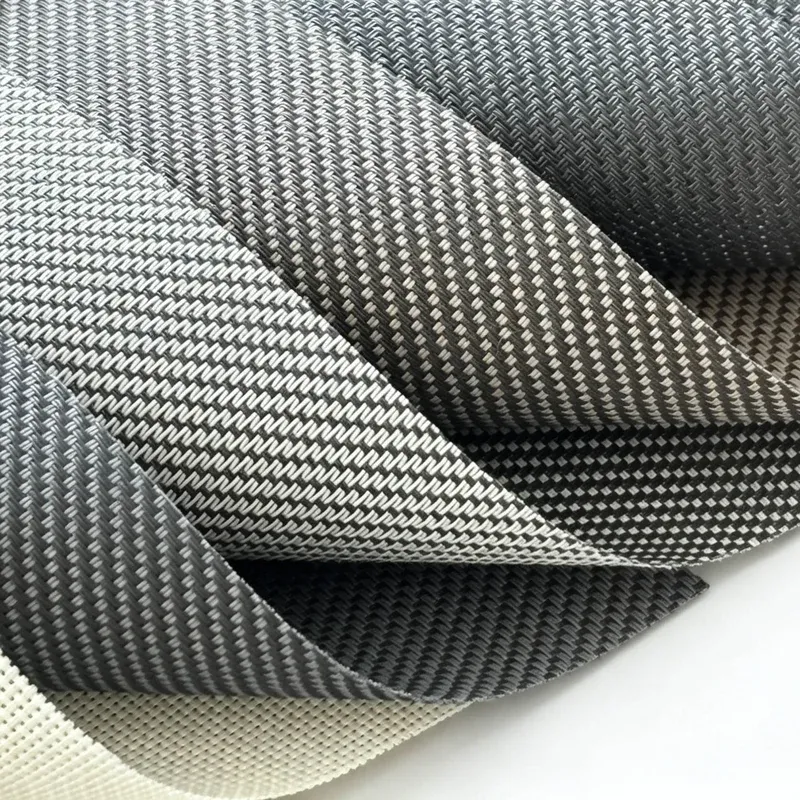
A vertical drop held by a bottom bar and wound on a tube. The fabric carries its own weight over the full drop, so weight, thickness and weave stability matter more than in almost any other use.
What the drop does to the fabric
The bottom bar is the load.
A roller blind hangs from the tube and is tensioned by the bottom bar. Over a long drop the whole weight of the fabric sits on the weave and on the tube, and any variation in width across the roll shows up as a curved hem. That is why a heavier, dimensionally stable cloth behaves better here than a light one, and why we quote weight with a tolerance rather than a single figure.
Weight
530 g/m² (±10) on the 3% range, 520 g/m² (±10) on the 5%.
Thickness
0.80 mm and 0.74 mm respectively.
Fabrication
Crush or ultrasonic cutting; thermal, HF, ultrasonic or sewn hems.
Three details decide whether the roll works: the drop, the width, and how the blind is fixed at the bottom.
01 / Drop1
Give the finished drop, not the window height
The fabric length is the drop plus the tube allowance and the bottom bar pocket. If you give us the window height we cannot size the roll, so send the finished drop the blind will be rolled to.
A pocket for a weighted bar and a sewn or welded hem are different operations. Tell us which one the system uses and we will quote the fabric accordingly.