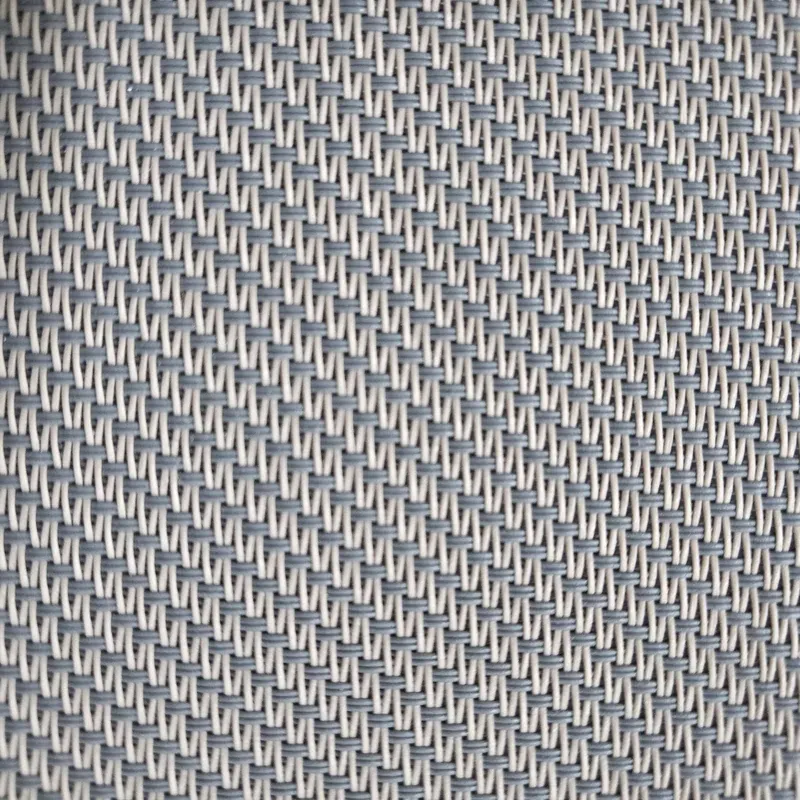
The fabric edge is zipped into side channels, so the cloth is held in tension across its full width. This is the most demanding use for edge quality and width consistency.
Why the edge decides the system
The zip runs on the cut edge.
In a zip screen the fabric is held taut by a zip welded or sewn to each vertical edge, and that zip runs inside an aluminium channel. If the cut edge wanders, the zip pulls unevenly and the screen tracks to one side. Dip coating helps here because the PVC penetrates each yarn rather than sitting on the surface, so a crush or ultrasonic cut leaves a clean edge without loose filaments.
Width tolerance
Order the width that matches the channel, not the opening. Tell us the channel-to-channel dimension.
Weave density
18 x 14 yarns per centimetre, 165 tex yarn.
Wind
The complete assembly is rated by the system supplier, not by the fabric alone.
Almost every zip-screen problem we are asked about traces back to one of these.
01 / Width1
Ordering the opening instead of the channel
The fabric width is the channel-to-channel distance plus the zip allowance, not the window opening. Send the channel dimension and the zip type and we will confirm the fabric width to cut.
A crush or ultrasonic cut seals the edge. A knife or a worn blade leaves protruding filaments that jam the zip. If your workshop cuts in house, tell us which method you use.
Openness is not standardised across the industry, so a 5% from one mill is not necessarily the same as ours. Judge the sample against the window before you fix the specification.